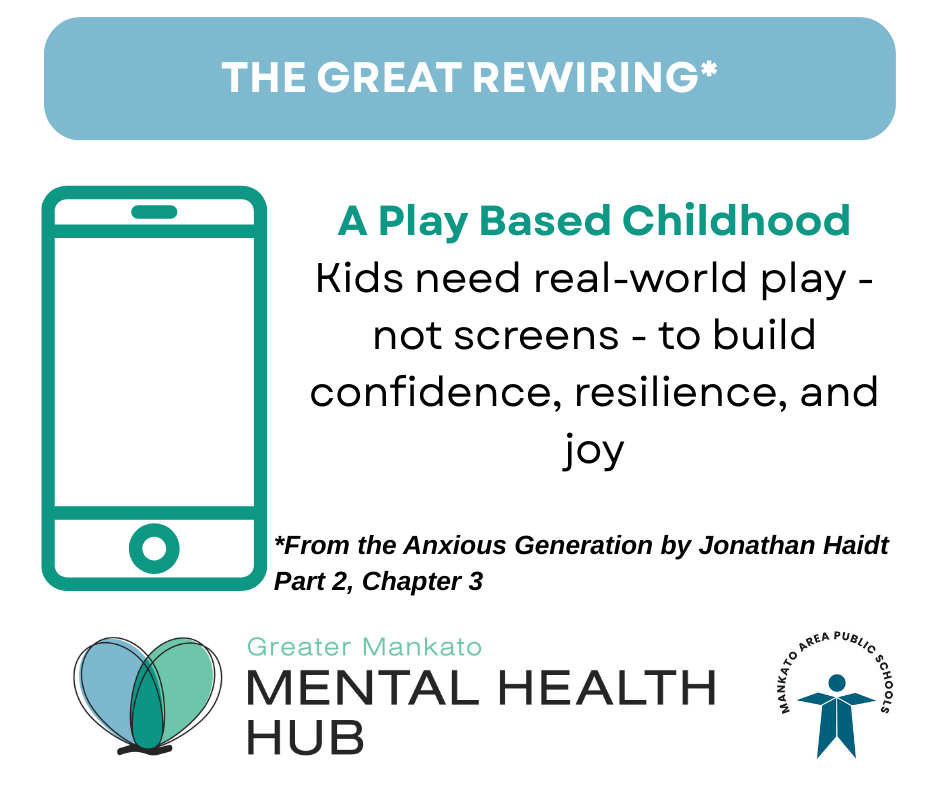
A Play-Based Childhood
Key Themes from Chapter 3 of The Anxious Generation by Jonathan Haidt:
- Shift from Play to Phones: Children used to develop through unstructured, sometimes risky, outdoor and social play, but now they're stuck indoors with phones, missing vital developmental experiences.
- "Defend Mode": Overprotection (safetyism) and constant digital input make kids overly sensitive, viewing ordinary challenges as dangerous and leading to anxiety and fragility.
- Importance of Risky Play: Haidt emphasizes that "risky play" (climbing, exploring, navigating social conflicts) is essential for developing confidence, self-efficacy, and coping mechanisms, which are lost in a phone-centric world.
- The Need for Independence: Children need freedom to explore and fail to learn resilience; phone-based childhood removes this opportunity, creating dependence and fear.
Haidt's Argument: To combat the youth mental health crisis, society must facilitate a return to childhoods with more independence and less phone-based immersion, allowing children to develop into capable adults by experiencing the world directly, not just through a screen.