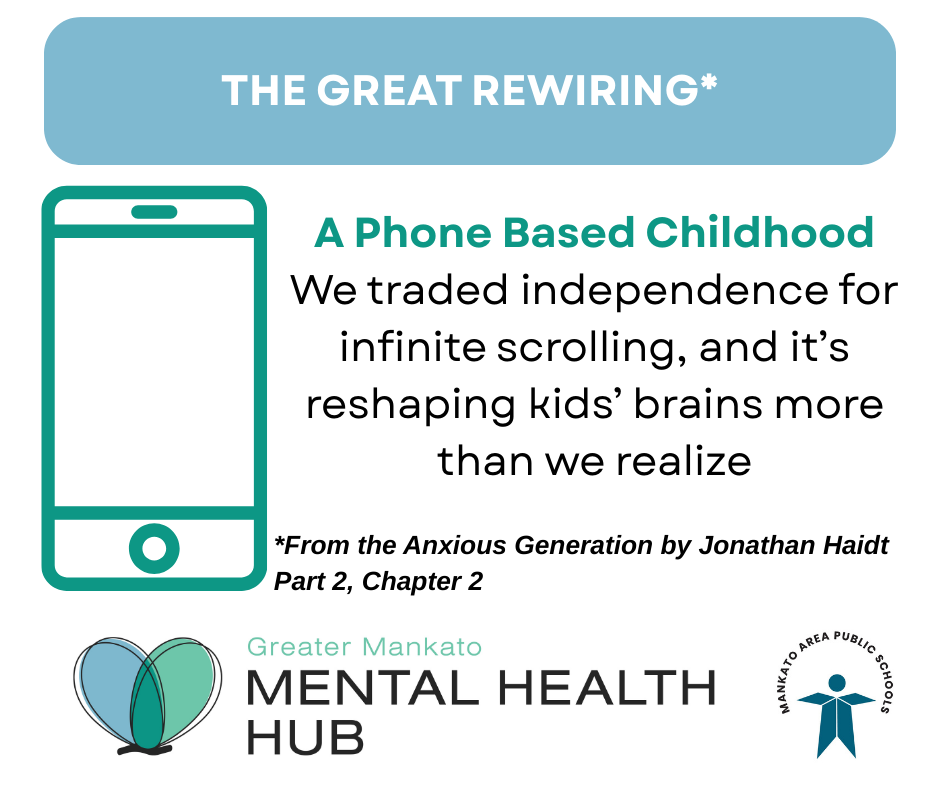
A Phone-Based Childhood
Key Themes in Chapter 2 of The Anxious Generation by Jonathan Haidt:
- The Loss of Play: Haidt argues that the shift from a play-based childhood (real-world games, exploration) to a phone-based one (digital interactions, curated online lives) deprives kids of vital social and emotional learning.
- Experience Blockers: Smartphones and overprotective parenting act as "experience blockers," preventing children from developing independence, facing appropriate risks, and building resilience through real-world challenges.
- Essential Childhood Experiences: The chapter highlights what children need:
- Free Play: Unstructured time for social interaction and problem-solving.
- Attunement: Synchronizing emotions and movements with peers during face-to-face play.
- Social Learning: Learning by observing and copying others, a process disrupted by endless online content.
- Sensitive Periods: Times when specific experiences (like risky play) are crucial for development, now being missed.
- Consequences: This lack of experience leads to underdeveloped social skills, increased anxiety, dependence on online validation, and difficulties with focus and executive function.
- The "Garbage Pump": Social media, with its addictive algorithms, fills the void left by real-world experiences with "garbage"—shallow content and unrealistic comparisons, overwhelming kids' developing brains.
In essence, Chapter 2 lays the foundation for the "Great Rewiring" by detailing what was lost in childhood, making the case for why children are becoming so anxious and setting up the need for systemic changes to restore a healthier upbringing.